
Learnings from the product and innovation battlefield
Long-form thinking on strategy, innovation, and the gap between intent and execution.

Why Your Strategy and Budget Tell Different Stories
Strategy and budgeting are fundamentally different processes, designed at different times, owned by different roles and optimised for different outcomes. The expectation that one naturally informs the other isn't naïve. I it's structurally wrong. Budget negotiations are political negotiations, and no amount of process redesign changes that incentive structure. What actually closes the gap is making resource decisions at the strategic level before the budget cycle begins. Most organisations don't. Here's what it looks like when they do.

How to Break Down a Business Strategy That's "Too High Level"
Every strategy implies trade-offs. Few strategies make them explicit. When they don't, teams fill the gap with assumptions, politics, and whatever the loudest stakeholder wants. I call this the missing middle. It's why clear strategy so reliably produces fragmented execution. Building the capability to close that gap is harder than publishing a strategy and more valuable.

Part 3 of 3: Does Corporate Innovation Still Matter?
Organisations tell their people to be bold while burying them under BAU, measuring them on core KPIs and giving them no structural permission to deviate from the norm. That contradiction sits underneath all six of the failure modes we keep seeing in corporate innovation. You can have brilliant strategy, strong experimentation discipline and clear priorities and still watch it all fail at the border between innovation and core business. Part 3 of this series is about why, and what actually fixes it.

From Experiment Theatre to Learning Discipline
Most enterprise innovation teams run what I call experimentation theatre: constrained tests designed to comfort stakeholders rather than generate learning. It's sometimes a necessary tactic. But if you're still doing it after 12 months, you've already failed. Here's how to move beyond it and why VP-level sponsorship might still cost you everything.

Part 2 of 3: Does Corporate Innovation Still Matter?
Innovation works when it's linked to strategy, has commercial accountability, runs visible feedback loops, and is treated as a lasting capability rather than a temporary program. Strip out any one of those and you get theatre. I've seen both sides of that equation across three very different environments. This is what the working version looked like in each of them.
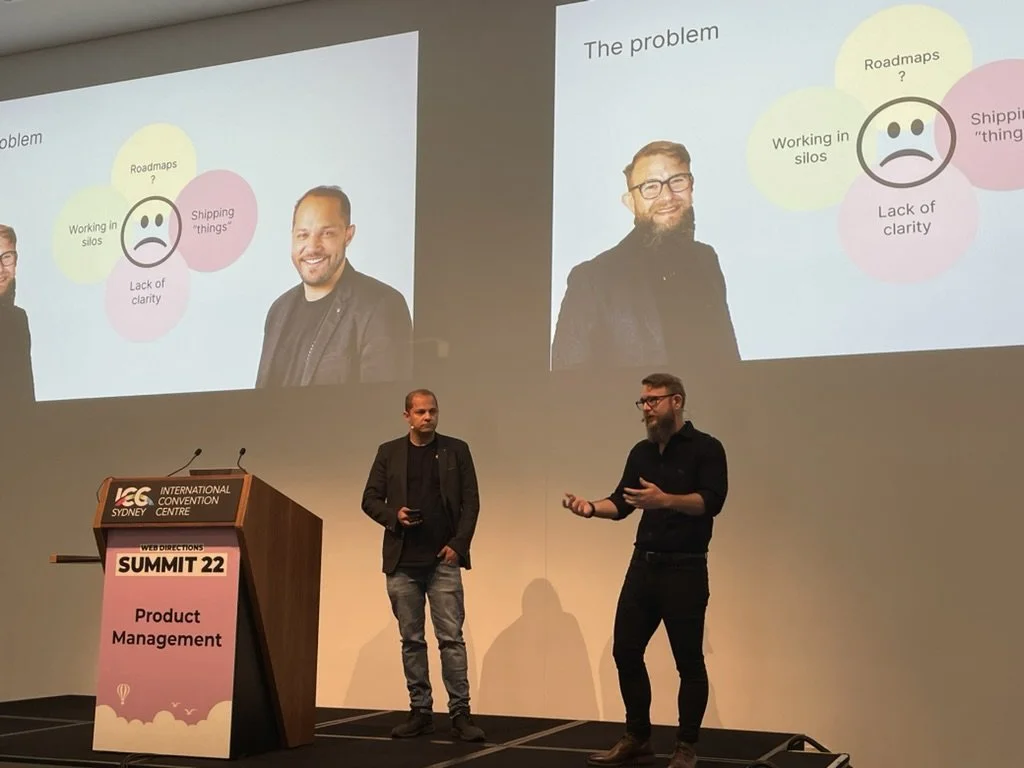
Sensemaking & the Strategy-Execution Gap
Your innovation team is very likely doing everything right: running experiments, validating hypotheses and gathering real customer data. The work is good. And the organisation has no idea what to do with it. The problem isn't execution, it's that most enterprises can't complete a learning cycle. Here's where the loop actually breaks, and what closing it looks like in practice.

Part 1 of 3: Does Corporate Innovation Still Matter?
After more than a decade in corporate innovation, including three soul-crushing years at a Big 4 firm, I had every reason to conclude it doesn't matter. The theatre. The defunded initiatives. The capability-building that evaporates when an executive sponsor moves on. Here's why I still believe it matters more now than ever, and why the problem was never innovation itself.

Ready to close the gap?

Let's diagnose where strategy and execution fracture in your organisation.